OVERVIEW
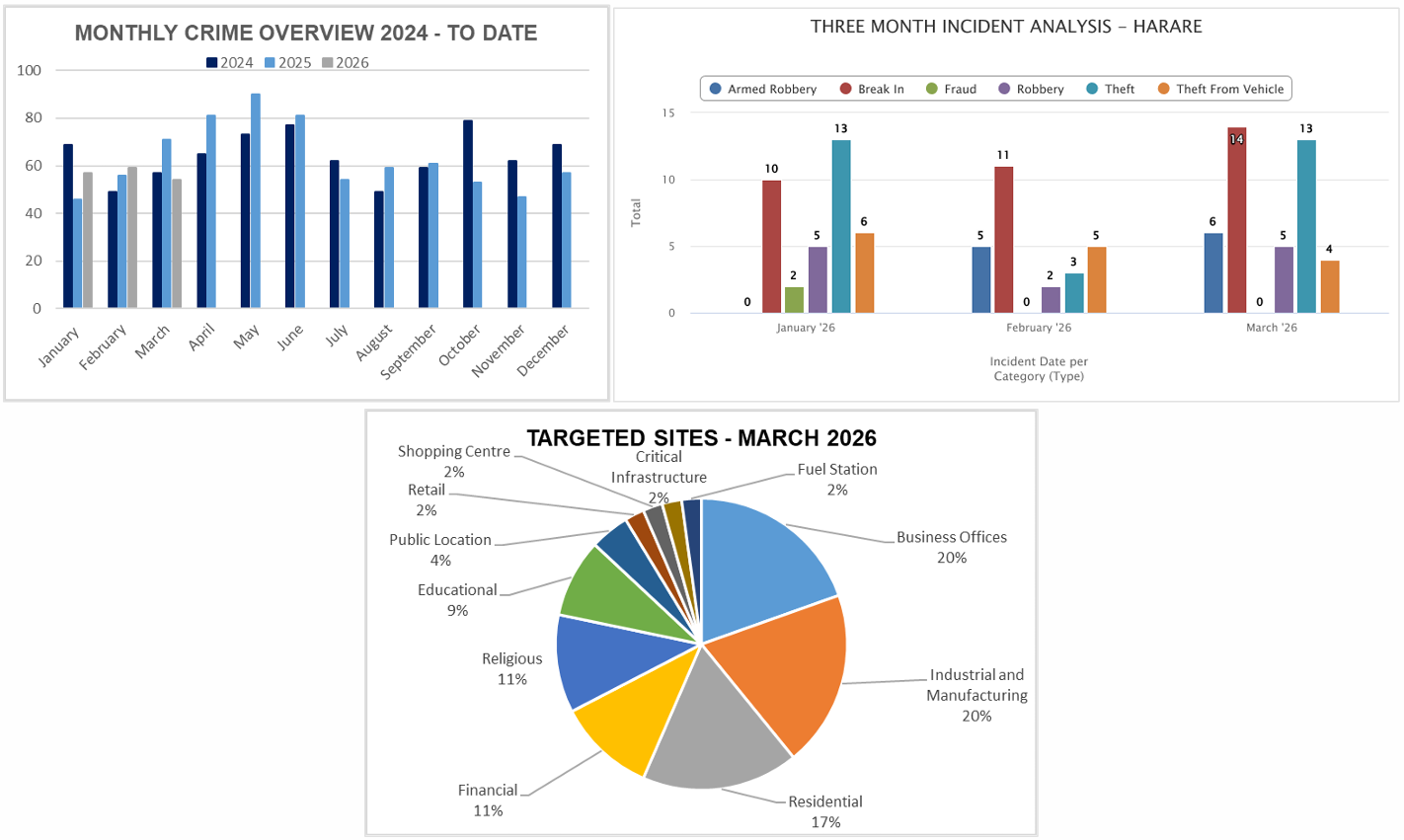
Overall, there is an 8% decrease in reported criminal incidents for our customers, but theft alone is up 10%. Nationwide, violent crimes continue to be reported at businesses and recently, churches. Police have confirmed the surge in violent crime and have implemented controls to combat the increase.
Money remains the common target. Given the rate of violence, the risk and cost of storing and carrying large amounts of money increases for both clients, security service providers, and employees. Businesses are urged to review their systems and revert to safer banking models and procedures.
With the increase in fuel, fuel theft increased and investigations revealed incidents of connivance by employees. The handling of fuel is a safety hazard – a market was recently burnt down in Beitbridge during a siphoning attempt.
The theft and robbery of vehicles remain a cause for concern in Bulawayo and Matabeleland North with motorists urged to avoid offering strangers rides, a temptation that has maybe crossed the minds of many motorists with the increased fuel prices.
Gate signage and lettering continue to be targeted in residential areas – possibly for resale at scrap yards.
Gate motors continue to be targeted and more recently Highlands, Ballantyne, and Marlborough.
The increase in fuel prices was marked with strike action and threats of strikes at hospitals due to the increase in cost of living. Public disturbances, arrests, and violence have been and continue to be reported as the public hearings on constitutional amendments continue.
Malaria cases have been reported in Manicaland and Mashonaland West with travelers and residents urged to take the necessary precautions when travelling to these areas.
OUTLOOK
According to ZimStat, a 12.1% increase in crime was reported in the last quarter of 2025.There is nothing to suggest that we will see a reversal of this trend.
There seem to be no quick answers to the war in the middle east and its negative impact locally. It is likely that we will see a rise in crime and unplanned opportunistic crime, a legitimate demand from labour for cost of living adjustments and possible dispute from this, and the return to further inflation.
The theft of fuel and illegal use of vehicles is likely to rise. This includes the siphoning of fuel from generators, vehicles and storage tanks.
Late night travel remains a risk as roads and bridges have been damaged in various provinces with major reports received from Mana Pools and Nkayi District, and along Gweru-Bulawayo highway.
ADVISORY
Greater awareness, early reporting of suspicious activity and trends, and active involvement in your security
is important. Community schemes and awareness through groups is useful, but really your security starts
with you. None of this should be too expensive if deployed sensibly, and better to do something than rely on
a feeling that all will be OK in your area.
- A secure perimeter that is a deterrent.
- A basic alarm system with response.
- Good lighting.
- Cameras for additional deterrent and warning (cameras can now patrol instead of or in support of
guarding effort).
- Close access control and limited entry after hours.
- Barriers where you can fit them to protect persons and assets.
- No cash on site.
For business a good look at the above, and at the risks of losses internally.
- Cash losses.
- Fraudulent entries – credit notes, warranties, deliveries ,payments.
- Abuse of systems related to inventory.
- Control for fuel and vehicles.
- Pilferage from site
As reported before. more guards do not mean better security. We have had excellent results across our base
with a change: Fewer manned posts, better use of existing alarms and cameras, integrated to simple AI tools to provide early alerts and alarms off site and locally. These solutions have proven less expensive and more effective where deployed with clear outcomes in mind – for most a need to balance budgets and improve security for site.
We have included some additional detail below on our crime this past month.
If you would like to discuss your options for security, or find out more about crime in your area, please contact us at info@safeguard.co.zw or analyst5@safeguard.co.zw respectively.
Thank you for using Safeguard.
The Safeguard Team
1. CRIME INCIDENT ANALYSIS
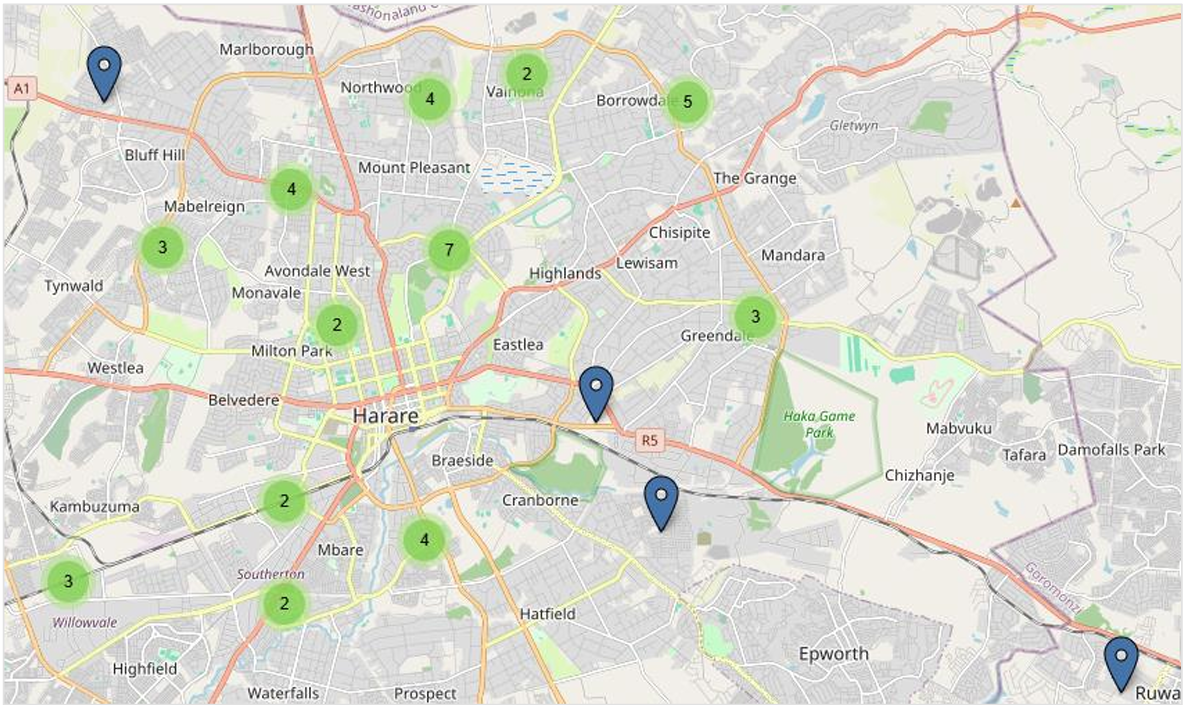
The above visuals depict the annual internal crime (first visual), Harare quarterly crime (second visual) and crime incidents by establishment in Harare (third
visual).
Key Risk Trends and Patterns
- Violent crime increased by 57% with criminals targeting businesses for money whilst non-violent crime
increased with thefts reported to Safeguard increasing by 10%.
- Violence remains a cause for concern during robberies with assault as the most reported.
- Money remains the primary target during both non-violent and violent crimes. Fortunately, a few
businesses managed to avoid significant cash losses after intruders targeted the site and failed to find money on site.
- The repeated targeting of sites puts businesses at risk of loss and damage to property where security
is not improved or routines changes after an incident.
- Fuel was targeted at both residential and business sites.
- Investigations reveal that connivance remains a cause for concern in the theft of money, fuel and other stock and materials.
High Risk Areas - march 2026
*A green circle with a numerical figure indicates the incident count for that area whilst a blue pin indicates an
incident in an isolated area.
- In the northern parts of Harare, high criminal activity (two robberies, two break-ins and one theft) was
reported in Alexandra Park with five incidents reported. In Harare West, churches were marked with
violent robberies including the sexual assault of a woman in Bluffhill and the fatal murder of a security guard in Marlborough.
- The southern industries remain more vulnerable to crime with Willowvale/Aspindale area still a high risk-area, whilst criminal activity increased in Graniteside in the past month.
2. TRAVEL, HEALTH AND SAFETY ALERTS
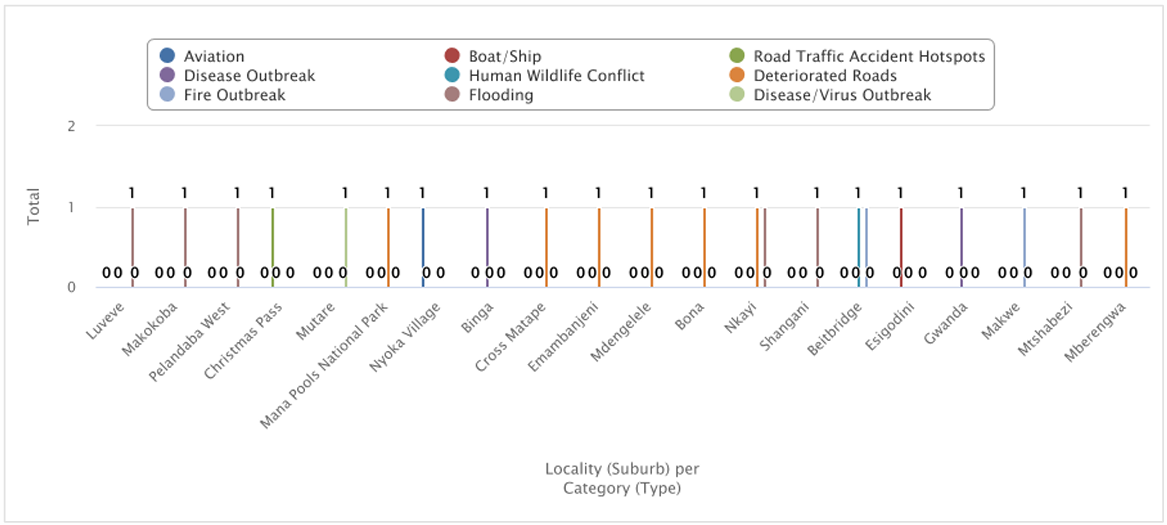
- With the recent heavy rains, the government has reported that at least 237 schools were damaged
whilst 56 people were marooned with most of them rescued after rivers flooded in various parts of
the country. several infrastructures were damaged in various parts of the country including but not
limited to:
- Mana Pools, Mashonaland West.
- Shangani Bridge along the Gweru -Bulawayo Highway, Midlands.
- Several Bridges in Nkayi District, Matabeleland North with Bubi-Nkayi Road as the most affected
road.
- Christmas Pass, Manicaland was flagged as a high-risk area for road traffic accidents with several
haulage trucks breaking down and being involved in accidents in that area.
- Human wildlife conflict continues to be reported in Beitbridge Rural District, and the district has
reportedly now requested the assistance of professional hunters to address the issue.
- The National Railways of Zimbabwe also reported on the increase in accidents on the railway lines
with two serious injuries reported in Mashonaland Central and Harare and one death reported Matabeleland South. The reports indicate that the people affected were unfortunately caught unawares and not paying attention whilst they were on the tracks.
- In Mashonaland West, as of the 22nd of March 2026, 16 people had died from malaria with Hurungwe
district recording almost half of the cases. Eight of the deaths between the 8th and 22nd of March 2026. In Manicaland, 312 malaria related deaths have been reported since January 2026.
Get the latest Crime Report in your inbox: simply complete the form below: